
修士
A Proposal for Architecture in a Flood Zone
ソシオリビングデザインスタジオ
#空間デザイン#都市デザイン#コミュニティデザイン
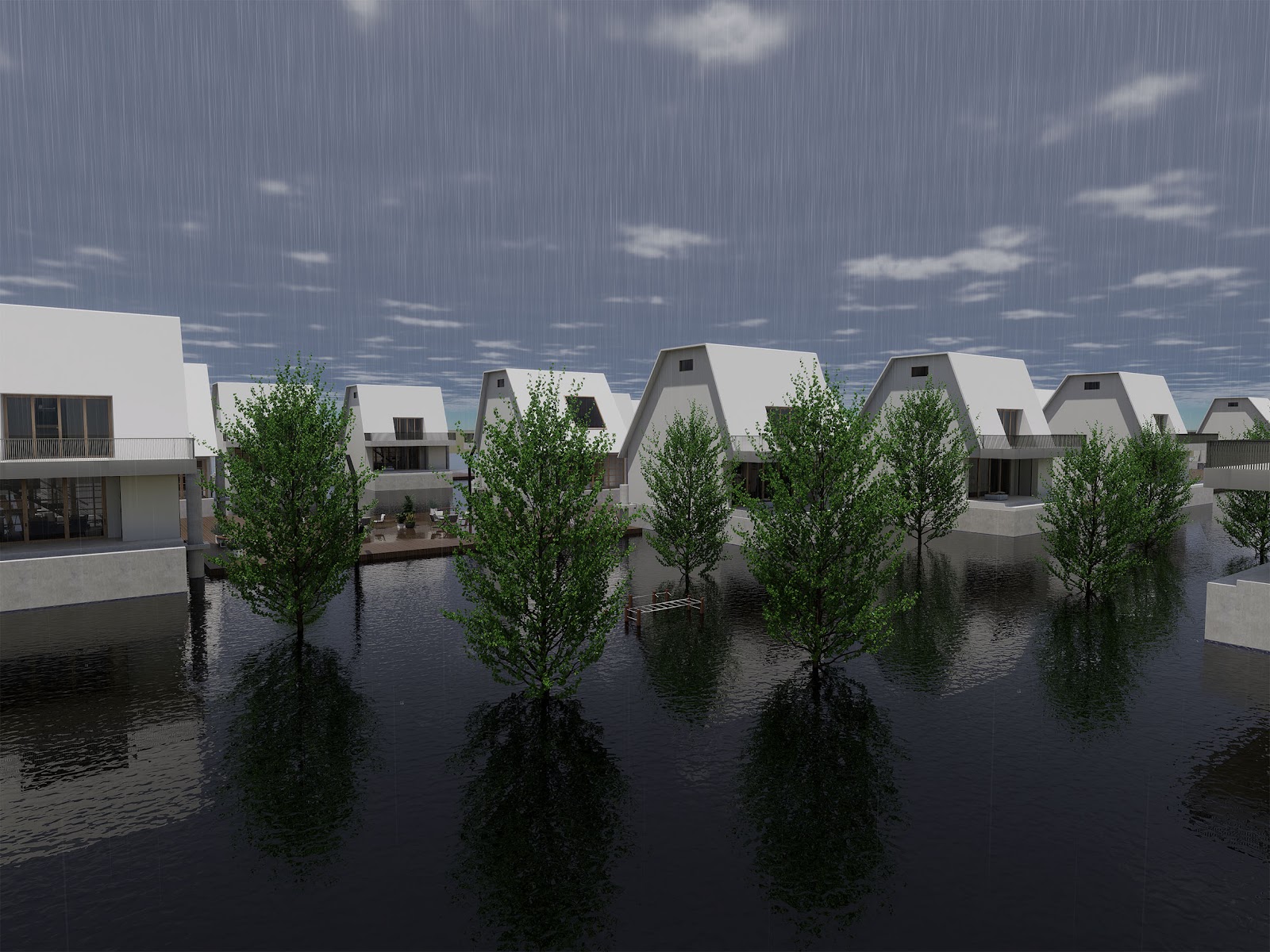
近年、気候変動の影響で記録的な豪雨が頻発し、日本における水害リスクは深刻さを増している。これまでの治水は、高い堤防で水を封じ込める防御型が主流であった。しかし、想定を超える洪水に対しては脆さがあり、巨大な壁が川と街を分断し、地域の景観や文化を損なうといった課題も浮き彫りになっている。
一方で、古くからの日本の知恵を振り返ると、洪水を完全に防ぐのではなく、あえて浸水を許容しながら被害を抑えて暮らす環境共生型の思想が存在していた。また、海外では水位の変動に合わせて建物が浮上する建築手法が注目されており、災害時に住民同士が助け合えるコミュニティの形成も、地域の回復力を高める重要な要素となっている。
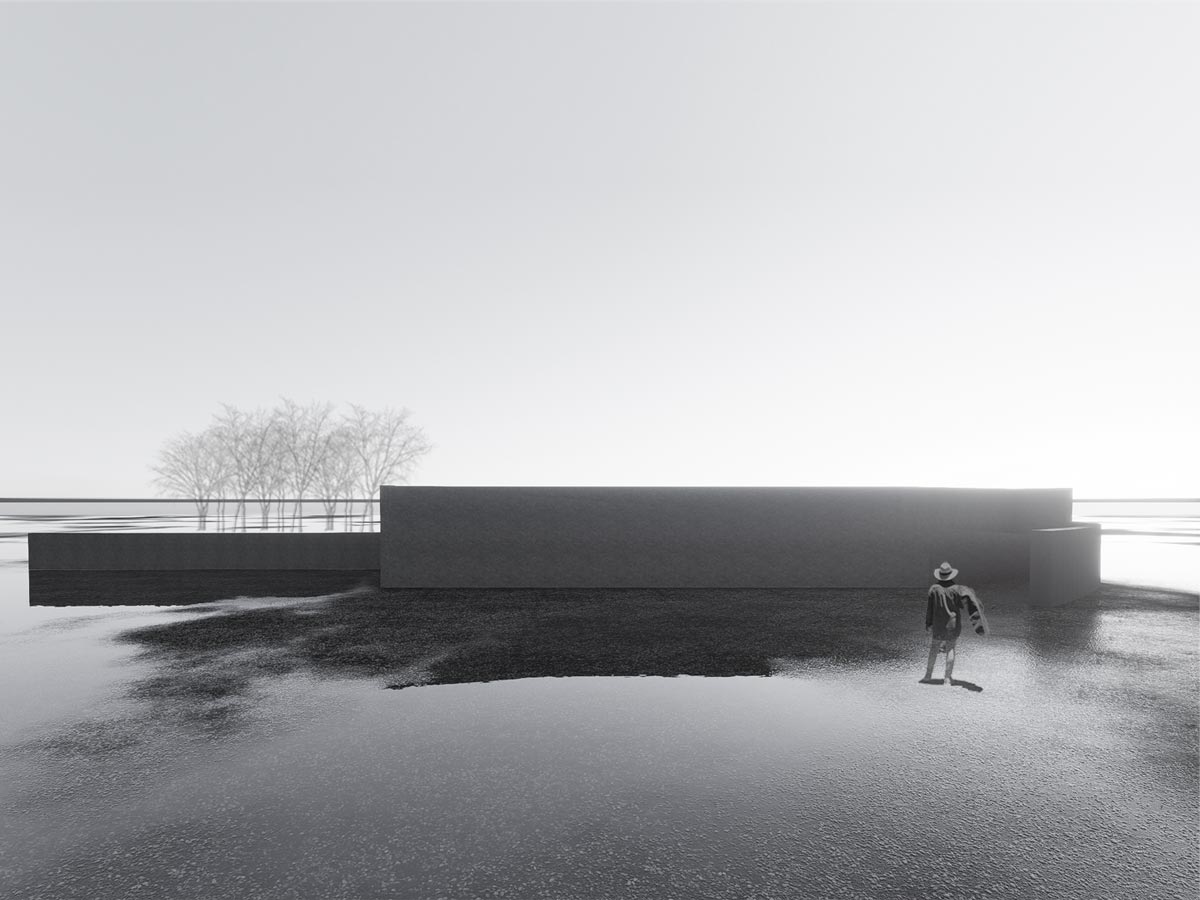
こうした背景を踏まえ、本研究では堤防だけに頼る治水の枠組みを超え、一時的に水を貯める遊水池を基盤とした、新しい日本型の水害対策モデルをデザインした。具体的には、横浜市の鶴見川多目的遊水池をモデルケースに、治水機能、地域コミュニティ、そして景観を統合する設計手法を検討した。
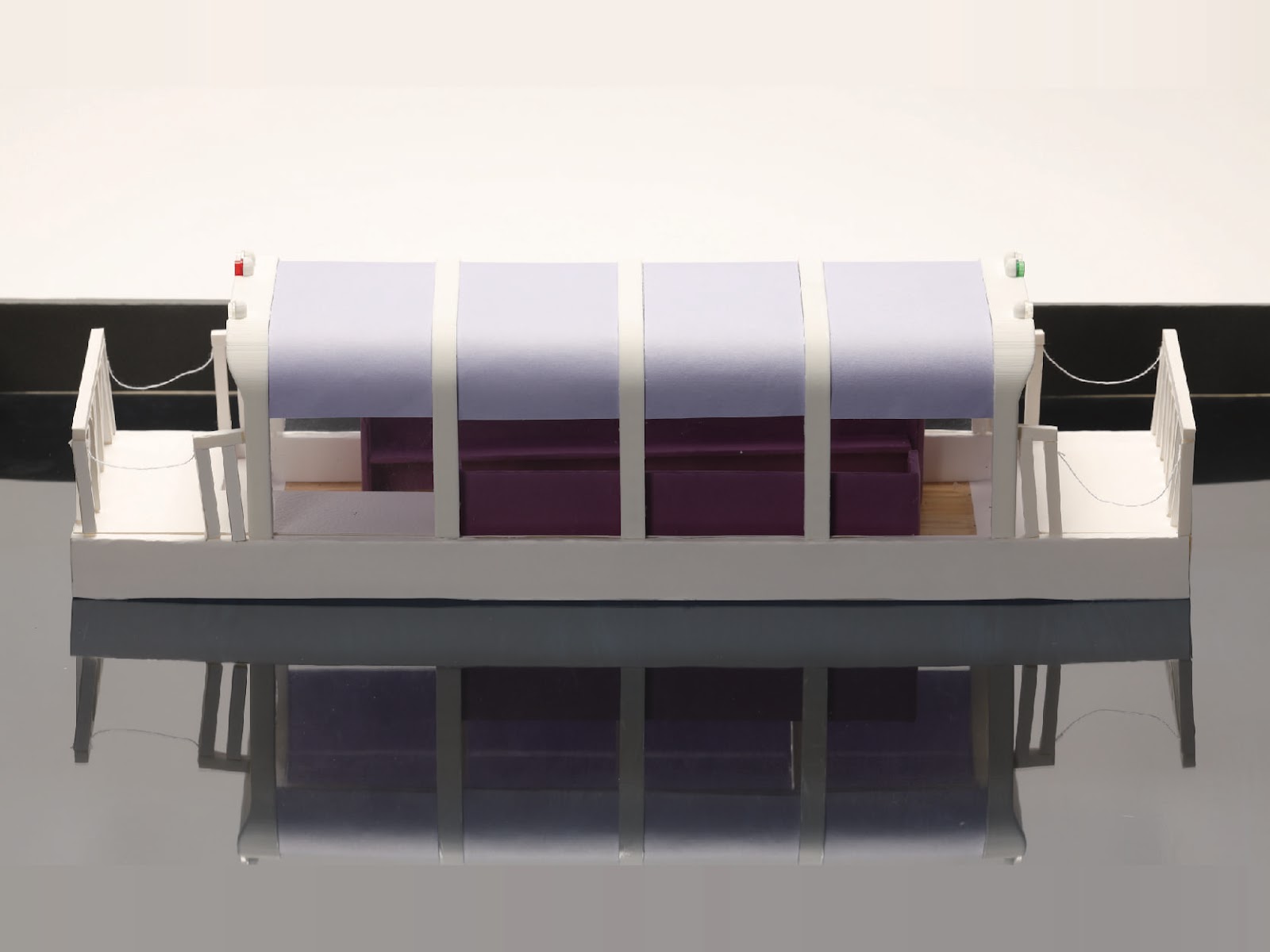
その結果、主に4つのデザイン手法を導き出した。1つ目は、水位に合わせて上下する浮体基礎を用いた浮上建築。2つ目は、土地の形状を活かして活用法を分けるゾーニング。3つ目は、公共空間と住まいを緩やかにつなぐコミュニティ設計。そして4つ目は、水の勢いを抑えつつ風景を整える防備林の配置である。
これらをマスタープランとしてまとめることで、遊水池を単なる防災施設ではなく、人が豊かに暮らせる居住空間として再定義した。この提案により、土地利用の制約が厳しい都市部においても、水害への強さと生活の質を両立させる設計の可能性を明らかにしている。
Flood risks in Japan have been increasing due to climate change, while conventional embankment-centered defensive flood control. Although effective to some extent, these measures face limitations, including vulnerability to extreme events and the physical and psychological disconnection between rivers and daily life. This study proposes a new Japanese flood management model that integrates retarding basins, floating architecture, and community-oriented spatial design. Using the Tsurumi River Multipurpose Retarding Basin as a model case, the study examines historical flood control practices in Japan and adaptive water-based architecture in the Netherlands. Based on this analysis, key design strategies are identified, including floating buildings that respond to water-level fluctuations, functional zoning of retarding basins, and the incorporation of intermediate communal spaces that encourage everyday interaction. By fostering mutual support and social ties during normal conditions, these communal spaces contribute to community resilience during floods. Redefining retarding basins as spaces that support daily life, social interaction, and recreation highlights their potential as integrated flood mitigation and living environments in land-scarce urban areas.
Map
この作品は Gallery A : A01にてご覧いただけます。
この作品に関連した作品・研究
お気に入りの作品
© 2026 Department of Industrial Art, Tokyo Metropolitan University