
学士
そわそわ行動をエンパワメントとして捉える──心理・生理指標に基づく評価
エルゴノミックデザインスタジオ
#UXデザイン#人間中心デザイン#ヒューマンコンピュータインタラクション
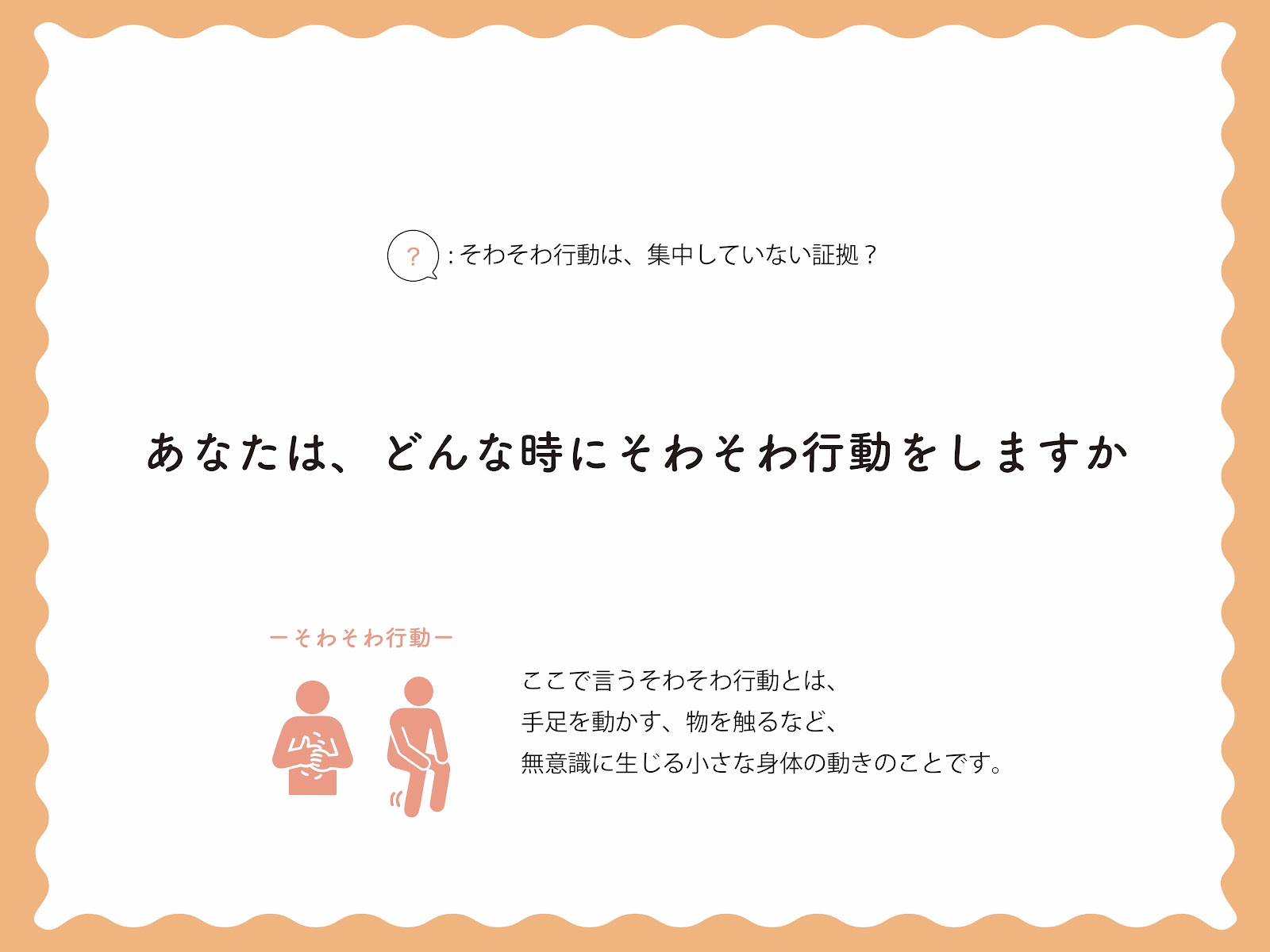
講義や会議の最中、無意識にペンを回したり、身体を小さく揺らしたりした経験はないだろうか。こうしたそわそわ行動は、これまで「落ち着きがない」「集中していない」といった否定的なイメージで語られることが多かった。しかし本人にとっては、眠気をこらえたり、頭の中を整理したりするための自然な動きである場合もある。本研究は、この身近な行動を「やめさせるべきもの」としてではなく、身体が自らを整えようとする働きとして捉え直すことを出発点としている。
これまでの研究では、ADHD特性との関連やフィジェットツールの効果などが検討されてきた。一方で、一般的な大学生が、日常の講義に近い状況でどのようにそわそわ行動を行い、それが心理状態や生理反応とどのように関わるのかを同時に検討した研究は多くない。そこで本研究では、大学生8名を対象に、身体の動きをできるだけ抑える条件と、自由に動いてよい条件の2つを設定し、35分間の講義映像を視聴してもらった。主観的な興味や集中の評価、前頭部の脳血流量、そして実際の行動回数を測定している。
その結果、単純に「自由に動ける方がよい」といった明確な差は確認されなかった。しかし、講義への興味が相対的に高まった参加者ほど集中度も高まる傾向が見られ、集中の実感と脳血流の変化が一部で対応する様子も確認された。また、視聴の前半と後半を分けて分析したところ、とくに動きを制御した条件において、自然に生じたそわそわ行動の変化と脳血流変化との関連が示唆された。ただし参加者数は少なく、これらはあくまで探索的な知見である。インタビューでは、そわそわ行動の理由として、覚醒の維持や気持ちの切り替え、姿勢の辛さへの対処などが語られた。また、行動を制御されたことについては、「動かないと眠くなる」「動いてはいけないことに意識が向いてしまう」といった声も聞かれた。
これらの結果から、そわそわ行動を一律に「集中していないサイン」とみなすことには慎重である必要があると考えられる。重要なのは、新たな行動を無理に付け加えることではなく、もともと人が持っている自然な調整行動をどのように理解し、どのように支えるかという視点である。本研究は、身近で見過ごされがちな小さな動きに目を向けることで、学習環境やデザインのあり方を改めて問い直すことを目指している。
Have you ever found yourself unconsciously twirling a pen or gently rocking your body during a lecture or meeting? Such fidgeting behaviors are often described as signs of being “restless” or “not paying attention.” Yet these movements may function as natural strategies to stay awake or organize thoughts. This study reconsiders fidgeting not as something to suppress, but as a bodily expression of self-regulation.
Previous research has examined links between fidgeting and ADHD traits, as well as the effects of fidget tools. However, few studies have explored how typical university students fidget in everyday lecture-like situations and how this relates to both psychological and physiological responses. In this study, eight university students completed two conditions: movement-restricted and free-movement. They watched a 35-minute lecture video while we measured subjective ratings of interest and concentration, prefrontal cerebral blood flow, and fidgeting frequency.
No clear overall difference suggested that being free to move was better. However, participants who reported higher interest also tended to report higher concentration, and in some cases concentration corresponded with changes in cerebral blood flow. When the viewing period was divided into two halves, a possible association between changes in fidgeting frequency and cerebral blood flow appeared, particularly in the movement-restricted condition. Given the small sample size, these findings are exploratory. Interviews indicated that fidgeting was used to maintain alertness, shift mental states, and cope with discomfort, while restricted movement sometimes led to sleepiness or heightened awareness of not moving.
Overall, these results suggest caution in interpreting fidgeting simply as inattention. Rather than introducing new behaviors, it may be more meaningful to understand and support the natural self-regulatory actions people already use, and to design learning environments that accommodate embodied self-regulation.
Map
この作品は Gallery A : A28にてご覧いただけます。
この作品に関連した作品・研究
![皮膚型インターフェースによる生物的[ヒト-モノ]コミュニケーションの構築](https://lh3.googleusercontent.com/d/1N5xbr5HXHwl2rb_dzTkxgo_Dz8XGLvK1)
お気に入りの作品
© 2026 Department of Industrial Art, Tokyo Metropolitan University