
修士
インタラクティブな庭園エコシステムの創出: 自然・主観性・テクノロジーの領域
インタフェースデザインスタジオ
#インタラクティブアート#インタラクションデザイン#リサーチスルーデザイン
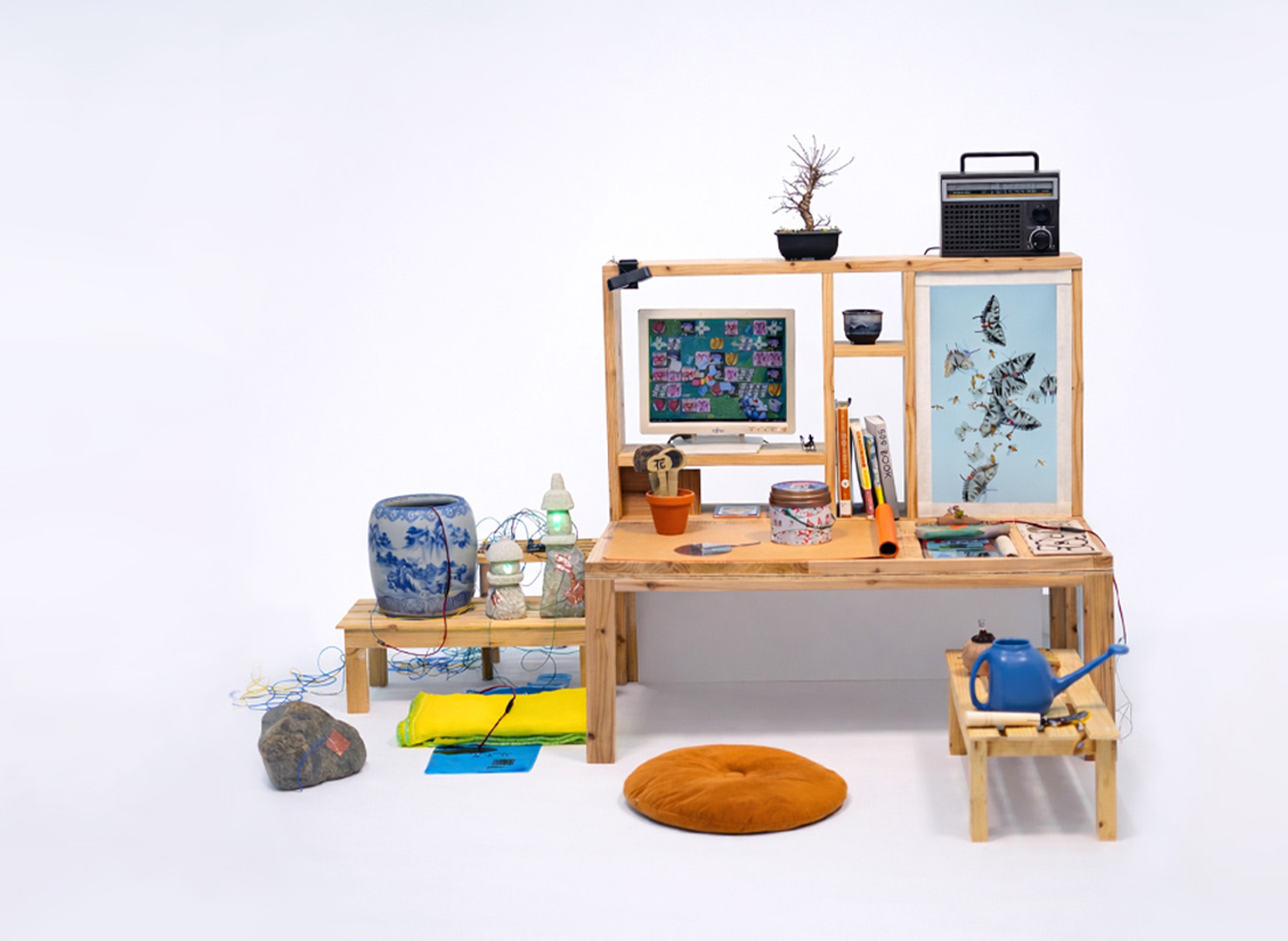
東京のような大都市では、空間は限られ、都市の過密さが地平線を覆い隠すことも少なくありません。しかし、自然はアスファルトとコンクリートの隙間に芽吹く小さな家庭菜園という断片として生き残っています。本作品は、インタラクティブ・アートがいかにしてこうした「日常の自然」を通じて私たちの生態学的意識を媒介できるかを探求する研究の成果です。
本インスタレーションは、物理的世界とデジタル世界が絡み合うハイブリッドなエコシステムの構築を提案します。石や日用品、園芸道具などの物理的アーティファクトが、生命感あふれるデジタル世界へのインターフェースとなります。研究段階で行われた探索的な情報蓄積である「アーバン・ガーデン・データベース」は、これらの空間を構成する想像力や動植物を理解し、マッピングする上での重要な基盤となりました。
即時的な応答やユーザーによる完全な制御を優先する従来のテクノロジーとは異なり、本作は「スロー・テクノロジー」の原則を採用しています。システムは確率論的なモデルによって制御されており、デジタル・エコシステムは独自の主体性と時間軸を持っています。観客は忍耐強い観察へと誘われます。オブジェクトを配置することで、シミュレートされた種の成長や変化に影響を与えますが、それを支配することはありません。このシステムは、生命系の持つ不透明性や相互依存性を反映しています。
本研究は、テクノロジーを単なる利用の道具としてではなく、主観性や配慮の手段として再考することを促します。それは、私たちを取り巻く都市生態系の目に見えない複雑さと、再びつながるための試みです。
クレジット:
アーティスト・研究者:Saito Mira Ayana
インターフェースデザイン研究室
指導教員: Baba Tetsuaki 教授
エコシステム・プログラミング: Rubens Braz
In a metropolis like Tokyo, where space is a scarce resource and urban density often suffocates the horizon, nature survives in fragments: in the small domestic gardens that sprout between asphalt and concrete. This work is the result of research investigating how interactive art can mediate our ecological awareness through these spaces of "everyday nature."
The installation proposes the creation of a hybrid ecosystem where the physical and the digital intertwine. Physical artifacts—such as stones, everyday objects, and gardening tools—serve as interfaces for a living digital world. The "Urban Garden Database," an exploratory storage of information compiled during the research phase, was fundamental to understanding and mapping the imagery, flora, and fauna of these spaces. While not technically linked to the ecosystem's operation, this mapping provided the conceptual foundation for translating the garden's complexity into the simulated environment.
Unlike conventional technological interfaces that prioritize immediate response and total user control, this work adopts the principles of Slow Technology. The system is governed by stochastic (probabilistic) models, meaning the digital ecosystem possesses its own agency and temporality. The audience is invited to a patient observation: by positioning objects, one influences but does not dominate the growth and dynamics of the simulated species. The system seeks to reflect the opacity and interdependence of living systems.
This research invites the public to rethink technology not as a tool for exploitation, but as a medium for subjectivity and care, capable of reconnecting us with the invisible complexities of the urban ecology that surrounds us.
Technical Credits:
Artist and Researcher: Ayana Saito (Interface Design Lab)
Supervisor: Prof. Tetsuaki Baba
Ecosystem Programming: Rubens Braz
Map
この作品は Gallery B : B22にてご覧いただけます。
この作品に関連した作品・研究
お気に入りの作品
© 2026 Department of Industrial Art, Tokyo Metropolitan University