
修士
折り紙との融合による絞りの保存と普及
ヴィジュアルコミュニケーションデザインスタジオ
#グラフィックデザイン#パターンデザイン#リサーチスルーデザイン
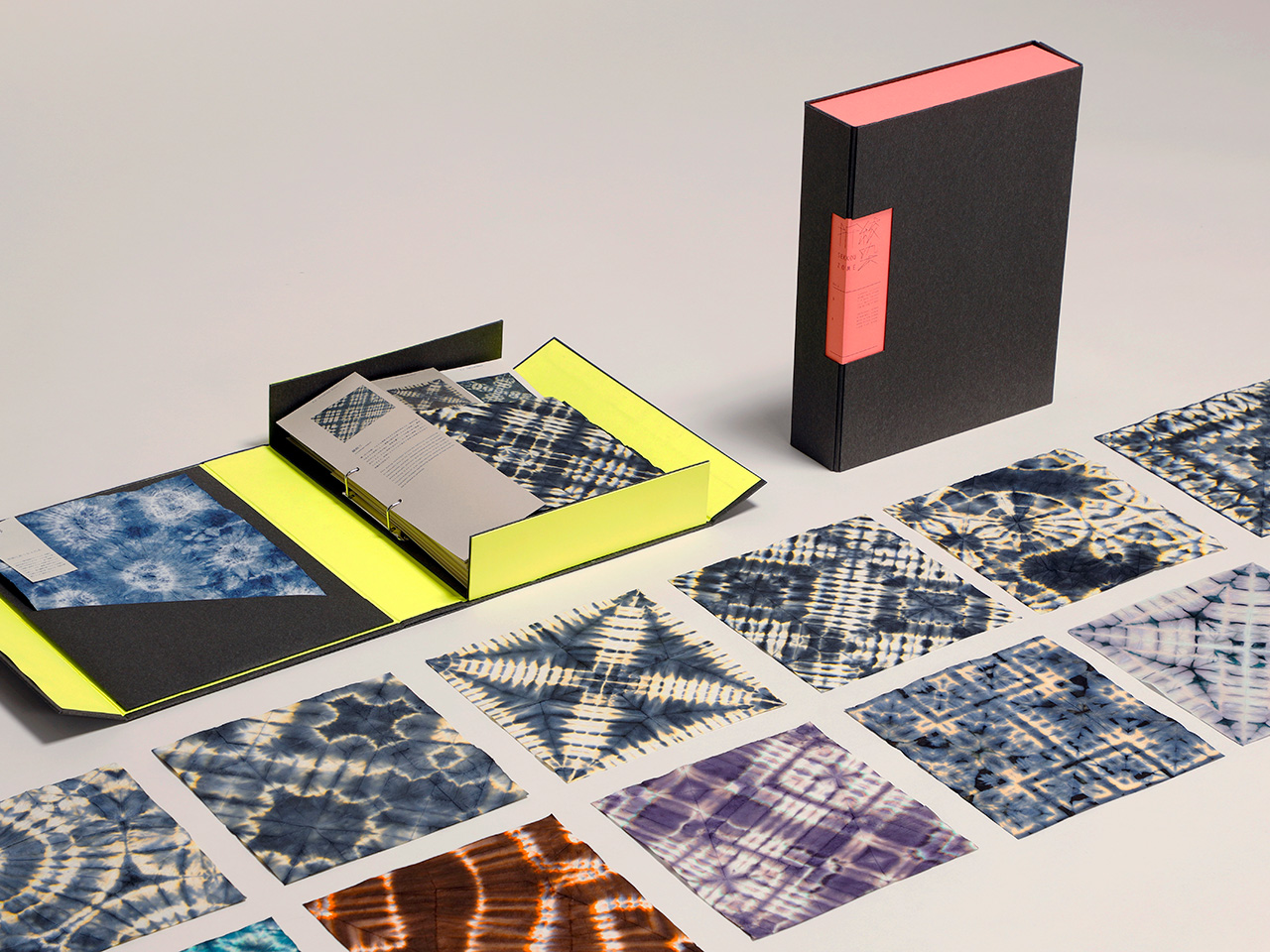
本研究は、二つの染色技法である「絞り染め」と「折り染」を組み合わせることで表現の幅を拡張し、誰でも実践可能で現代のライフスタイルに取り入れやすい新たな染色技法として確立・提案することを目的としている。絞り染めは奈良時代に起源を持ち、布を括る、縫う、巻くといった単純な操作を基礎としながら発展してきた日本の代表的な伝統染色技法であり、国内では100種類以上の技法が確立されてきた。しかし近年は技術保持者の高齢化や後継者不足、道具や原材料の消失などにより、継承の困難さが顕在化している。
一方で、ハンドメイド市場を中心に「自らの手でつくる」行為への関心は高まりを見せている。そのため、伝統技法そのものの魅力が失われたのではなく、習得に要する時間や専門性、材料入手の難易度が参加の障壁となっている可能性があると考えた。そこで本研究では、伝統技法の本質を踏まえつつ工程を再構築し、初心者でも取り組みやすい技法の在り方を模索した。
提案する技法「折絞染」は、「藍染おりがみ絞り」を基礎とし、折り紙のように素材を折りたたみ絞る工程を応用したものである。染色媒体には布ではなく和紙を用い、高い吸収性による色分離や染色時間の差異によって生じる模様の変化を検証した。さらに複雑な折り構造を導入することで、折りと模様の関係性を考察し、多様な表現の可能性を示した。
藍染師への取材調査、応用実験、ワークショップを通して再現性と応用性を検証した結果、工程の簡略化と表現の拡張を両立する技法として成立し得ることを確認した。本研究は、伝統技法への関心を喚起し、染色表現の新たな入口を提示する試みである。
This study aims to establish and propose a new dyeing technique, Sekkou-zome, by
combining the traditional techniques of shibori dyeing and folding dyeing, using washi
paper as the dyeing medium. The technique is designed to be accessible to beginners,
avoiding highly specialized skills and materials, and to fit contemporary lifestyles.
Through experimental verification, this research clarifies pattern variations caused by
differences in paper folding structures, binding positions, and dyeing time, as well as
color separation effects resulting from the absorbent properties of washi. In addition,
workshops were conducted to confirm the reproducibility and adaptability of the
technique.
This study lowers the barriers to participation in traditional dyeing techniques and
demonstrates new possibilities for the expansion of dyeing expression.
Map
この作品は Gallery B : B24にてご覧いただけます。
この作品に関連した作品・研究
お気に入りの作品
© 2026 Department of Industrial Art, Tokyo Metropolitan University